


(7 minute read)
Key Macro Takeaways
Oil remains a global market.
Even though the United States is the world’s largest oil producer, prices are determined in global markets. Disruptions in key chokepoints such as the Strait of Hormuz can quickly affect energy prices worldwide, including at U.S. gas stations.
Energy shocks can complicate the inflation outlook.
Oil price increases tend to move through the economy in stages, from commodities to producer prices and eventually consumer prices, potentially slowing the recent progress on inflation.
The risk is “stagflation lite.”
A sustained energy shock could create a difficult combination of higher inflation and slower economic growth, complicating decisions for central banks.
Markets often rotate during inflation shocks.
Historically, energy, commodities, and value-oriented sectors tend to outperform when inflation expectations rise, while long-duration growth assets often face pressure.
The United States is now the world’s largest oil producer, pumping more than 13 million barrels per day thanks largely to the shale revolution. While that surge has significantly improved domestic energy security, it has not fundamentally changed the global nature of oil markets.
Oil prices are still determined by worldwide supply and demand.
That means geopolitical disruptions abroad can quickly influence energy costs at home.
A Reminder From the Latest Oil Shock
Geopolitical tensions quickly ripple through energy markets.
Recent tensions involving Iran highlighted how sensitive global energy markets remain to geopolitical risk.
Concerns about shipping through the Strait of Hormuz (a narrow passage carrying roughly 20% of the world’s petroleum supply) briefly rattled markets.
Oil prices reacted rapidly to supply fears.
Prices moved from below $70 per barrel to nearly $120 at the peak of market anxiety before stabilizing closer to $90.
Consumers ultimately feel the impact.
Even with strong domestic production, American consumers still face prices shaped by global markets.
Oil is traded through global futures exchanges, where expectations about future supply can shift prices quickly.
Gasoline prices reflected that dynamic, rising roughly 27 cents per gallon in a single week as markets reacted to supply concerns.
In short, the United States may be energy dominant, but it remains deeply connected to the global oil market.
Inflation Was Cooling—Before Energy Risks Re-Emerged
Inflation had been steadily moderating.
Before the recent geopolitical shock, the Consumer Price Index (CPI) was running near 3% year over year, well below the peaks reached in 2022. Core inflation was also gradually trending lower.
Energy prices could slow that progress.
Energy represents roughly 7% of the CPI basket, but its influence extends far beyond that direct weight.
Higher fuel costs ripple through the economy.
Transportation becomes more expensive, manufacturing costs rise, and agricultural and logistics expenses increase. Over time, some of those higher costs are passed on to consumers.
Understanding that process requires looking further up the inflation pipeline.
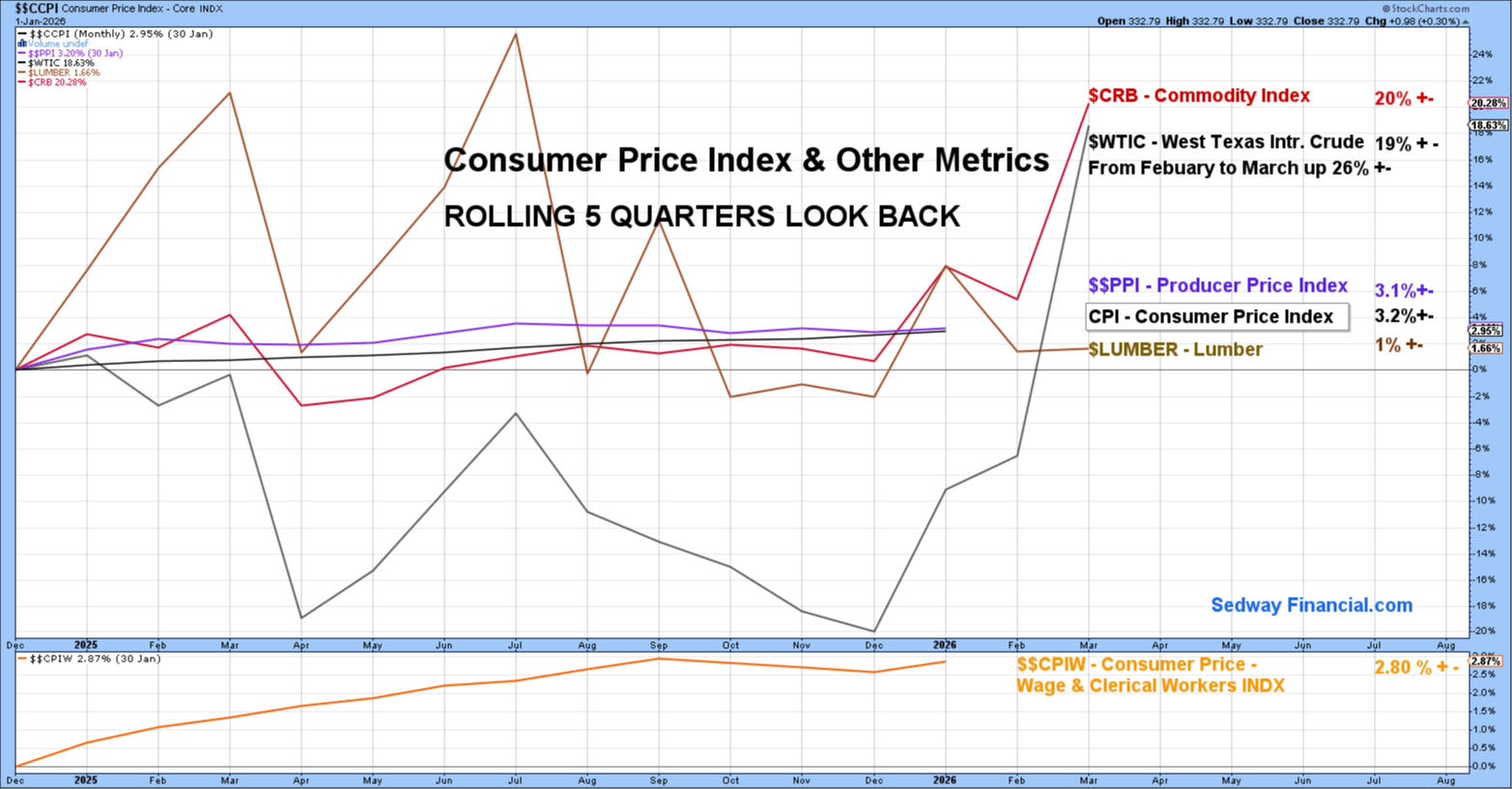
Financial headlines over the past year have focused heavily on one number: inflation. Most investors hear about the Consumer Price Index (CPI) and assume it tells the full story. In reality, inflation dynamics are more complex.
How Inflation Moves Through the Economy
Inflation pressures often begin earlier in the production chain.
Financial headlines frequently focus on the Consumer Price Index (CPI), but inflation dynamics are more complex.
The chart above illustrates several stages of the inflation pipeline, including commodity prices, oil, the Producer Price Index (PPI), and the Consumer Price Index (CPI).
CPI is a lagging indicator.
Currently near 3.2%, it reflects the prices consumers are already paying.
Producer prices offer earlier signals.
The PPI is near 3.1%, suggesting businesses continue to face elevated input costs.
Commodity prices have risen more than 20% in recent months, while oil prices have increased roughly 19%.
Inflation pressures often move through the economy in stages:
Commodities → Producer Prices → Consumer Prices
Because commodities and energy sit at the earliest stage of production, rising prices in these markets can signal inflationary pressure building beneath the surface.
Historically, sustained increases in oil prices have added modest but meaningful pressure to headline inflation, particularly if higher energy costs persist for several months.
For investors, these upstream indicators can offer early clues about where inflation, and monetary policy, may be headed.
Whether the recent rise in energy prices becomes a lasting inflation risk will depend largely on whether supply disruptions persist or energy markets stabilize in the months ahead.
The Return of “Stagflation Lite”?
Oil shocks can create a difficult economic mix.
Higher inflation.
Rising energy prices increase transportation, manufacturing, and household costs.
Slower growth.
Higher fuel expenses reduce consumer spending power and increase business costs.
This combination resembles stagflation, often associated with the 1970s. Today’s economic environment is very different: labor markets remain relatively strong and inflation is far below the double-digit levels seen during that period.
Still, some economists warn of a “stagflation-lite” scenario in which growth slows while inflation stops falling.
A prolonged energy shock could complicate policy decisions.
Central banks may face a difficult balance between controlling inflation and supporting economic growth.


Why This Matters for Investors
Energy shocks affect more than just fuel prices.
They can influence inflation expectations, interest rates, and market leadership.
Inflation volatility may increase.
Higher oil prices can temporarily reverse disinflation trends and increase uncertainty around inflation forecasts.
Interest rate expectations may shift.
If inflation begins rising again, the Federal Reserve may delay potential interest rate cuts.
Market leadership can rotate.
Periods of rising inflation expectations have historically favored energy companies, commodity producers, industrials, and other value-oriented sectors.
Long-duration growth assets, such as many technology stocks, often face greater pressure as interest rate expectations rise.
Consumer spending may face pressure.
Higher gasoline and heating costs reduce discretionary income, potentially slowing retail and service spending.
Although today’s economy is more energy efficient and diversified than in past decades, geopolitical disruptions can still shift the economic outlook quickly.
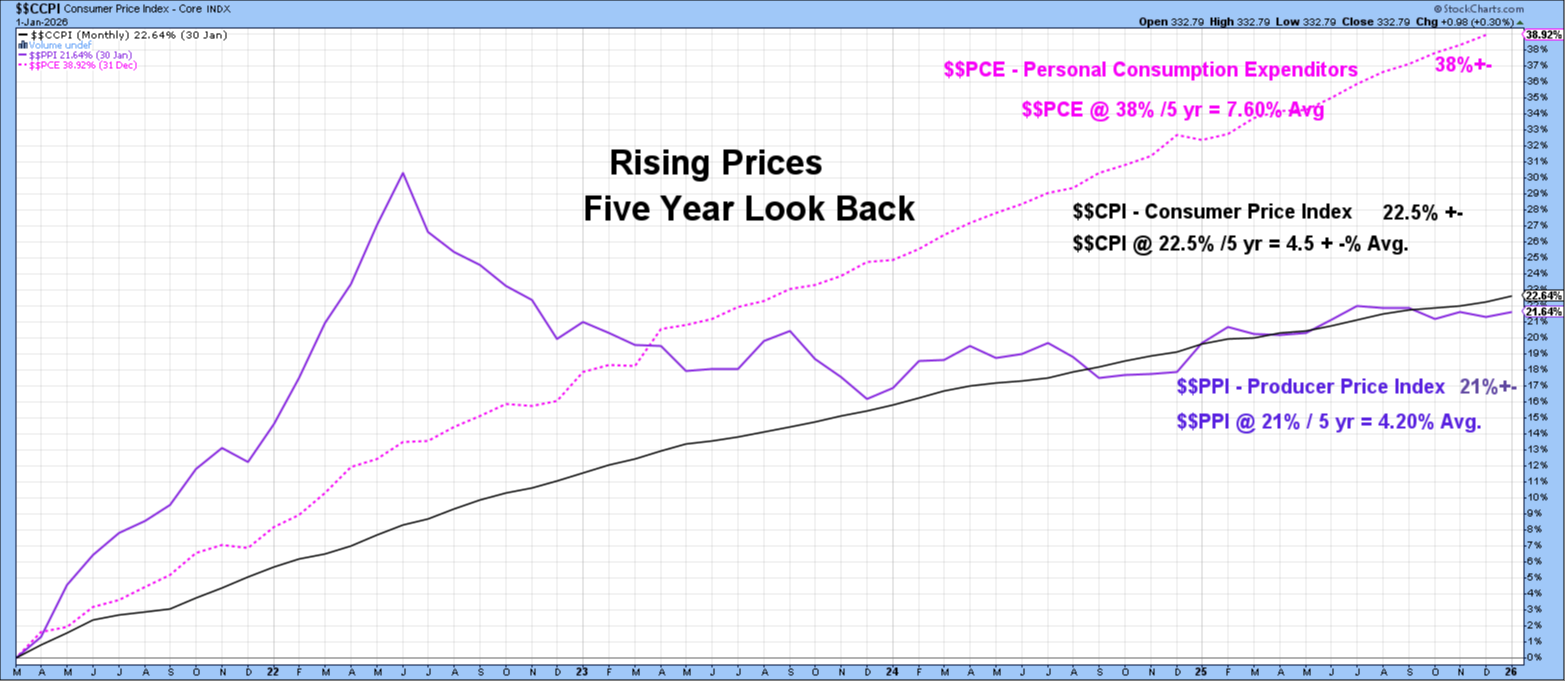
Inflation has cooled from its 2022 peak, but the cumulative effect of several years of higher inflation means prices today remain roughly 20–25% higher than before the pandemic.